



Lengthy earlier than sustainability turned a defining dialog in journey, Zannier Motels was constructing a group guided by a easy philosophy: go away a spot higher understood, fastidiously preserved and deeply revered. Based by Arnaud Zannier, the model has grown thoughtfully, looking for out extraordinary locations the place conservation, cultural heritage and a robust sense of place information the visitor expertise. The result’s a portfolio of retreats that invite vacationers not solely to find a few of the world’s most lovely corners, however to attach with them in a extra significant method. Be part of us as we discover six distinctive properties, together with the extremely anticipated debut of Zannier Île de Bendor, the model’s latest opening within the French Mediterranean, and the imaginative and prescient that unites all of them.
Zannier Île de Bendor
Île de Bendor, France
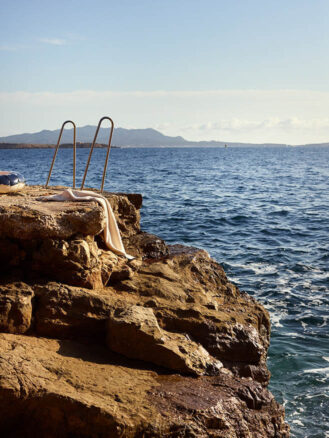
Freshly opened in Might 2026, Zannier Île de Bendor marks the end result of a outstanding five-year restoration mission on the non-public Île de Bendor, simply off the Provençal coast. Fairly than merely creating one other luxurious retreat, Zannier Motels and the Ricard household got down to revive the imaginative and prescient first imagined by Paul Ricard (the entrepreneur whose title turned synonymous with pastis) in 1950: an island backyard the place nature, tradition and neighborhood might flourish. In honor of that legacy, the seven-hectare island has been extensively rewilded, rising with 15 % extra timber than earlier than and a renewed dedication to preserving its Mediterranean panorama. Right now, the restored, car-free Provençal village welcomes friends to a 93-room retreat impressed by the relaxed glamour of the Nineteen Sixties. Sustainability extends past the panorama, too, with the island persevering with its longstanding dedication to marine conservation and environmental training by means of the Paul Ricard Oceanographic Institute.
Zannier Sonop
Namib Desert, Namibia
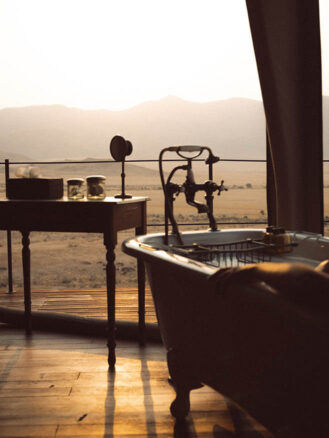
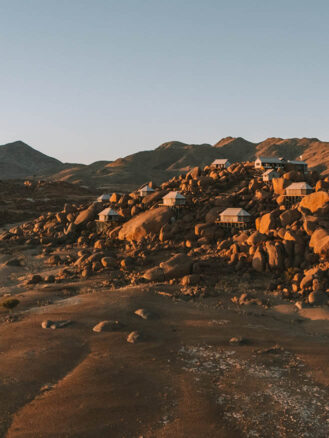
Rising from a sea of rust-colored dunes and granite boulders, Zannier Sonop gives a masterclass in constructing with, relatively than towards, the panorama. Set inside 13,800 non-public acres of untouched Namib Desert wilderness, the tented retreat was fastidiously constructed atop current rock formations utilizing minimal intervention, with no heavy equipment employed in the course of the construct to protect the delicate ecosystem. Designed within the type of a Twenties British colonial camp, the lodge blends seamlessly into its environment whereas treading calmly upon them, described by our journey associate Michelle Halpern of Reside Like It’s the Weekend as “an grownup playground that feels blissfully removed from the attain of civilization.” Right now, Sonop stays totally solar-powered and Inexperienced Globe Licensed, reflecting an ongoing dedication to conservation, accountable tourism and the safety of one of many world’s oldest desert environments. The result’s a keep that feels each splendidly distant and deeply linked to the spectacular wilderness that makes it doable.
Zannier Omaanda
Windhoek, Namibia
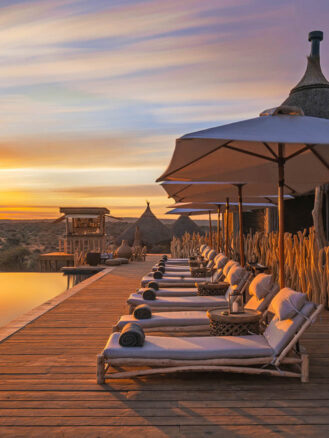

Surrounded by 22,000 acres of protected Namibian savannah, Zannier Omaanda is outlined by a cautious stability of cultural preservation, wildlife conservation and low-impact hospitality. The 15-room lodge is impressed by conventional Owambo structure and constructed utilizing genuine native constructing strategies, guaranteeing it stays deeply rooted in Namibia’s cultural heritage whereas echoing its pure environment. Set inside the Zannier Reserve by N/a’an ku sê, a 7,500-hectare conservation space established in 2016, the lodge sits inside a residing wildlife panorama the place open bushveld is shared with rhino, elephant and large cats. In partnership with the N/a’an ku sê Basis, the reserve helps ongoing wildlife rescue, rehabilitation and long-term ecosystem safety, reinforcing a broader dedication to accountable, community-conscious stewardship.
Zannier Bãi San Hô
Quy Nhơn, Vietnam
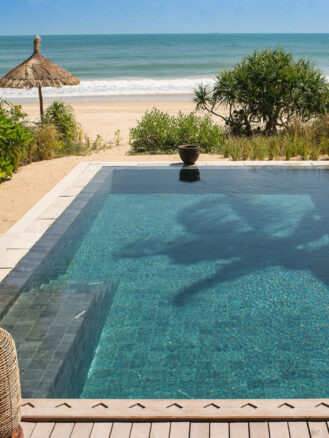
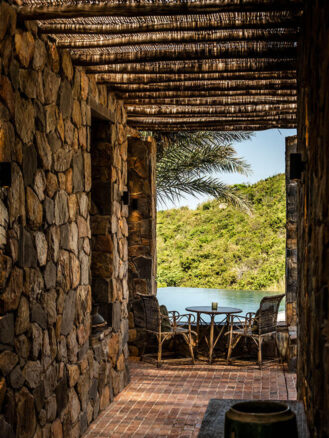
Set alongside a secluded stretch of Vietnam’s central coast in Đắk Lắk province, Zannier Bãi San Hô spans 98 hectares of protected panorama the place rice paddies, jungle hills, a kilometre-long white sand seashore and a regenerating coral bay meet. The 73 villas are thoughtfully dispersed throughout the terrain, designed in concord with conventional Vietnamese strategies and crafted from pure supplies resembling wooden, bamboo, stone and thatch. Right here, you’re rooted in place: friends can discover close by fishing and farming villages with native guides, be taught time-honored practices from artisan households, watch salt harvesting alongside the coast or be a part of fishermen at sea. Between hidden waterfalls and shared native meals, the resort turns into a gateway to tales of coastal Vietnam.
Zannier Phum Baitang
Siem Reap, Cambodia
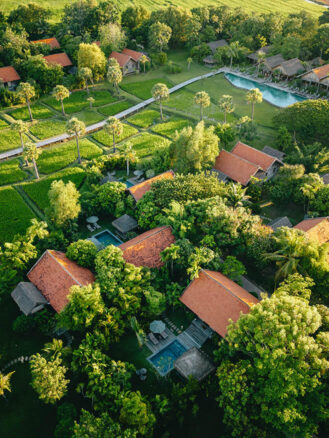
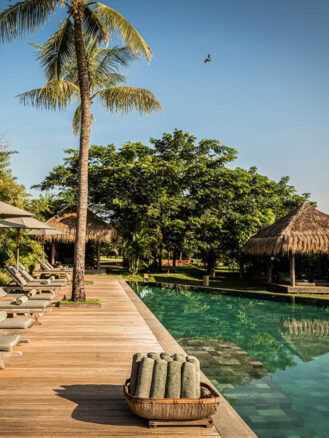
Identified in Khmer because the “inexperienced village,” Zannier Phum Baitang sits simply past the UNESCO-listed Angkor advanced in Siem Reap, designed as a residing interpretation of conventional village life with sustainability at its core. Set amongst lush rice paddies and tropical gardens, its picket stilted villas mix sensitively developed design with a deep respect for native heritage and the encompassing panorama. Inexperienced Globe Gold licensed after 5 consecutive years of excellent sustainability efficiency, the resort champions a round strategy to hospitality, from eliminating single-use plastics and advancing recycling and composting methods to rising a lot of its personal produce throughout natural gardens and 42 rice paddies. Past the village itself, its inexperienced ethos extends into the broader neighborhood by means of training initiatives and native partnerships, guaranteeing its philosophy is felt nicely past its boundaries.
Zannier Le Chalet
Megève, France
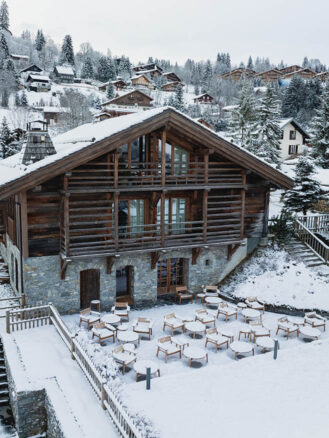
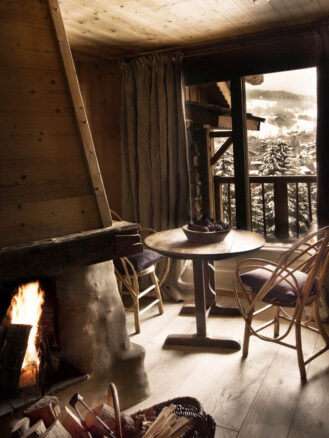
Impressed by the purity of the Mont Blanc peaks, Zannier Le Chalet’s strategy to sustainability is rooted in simplicity and restraint. Open solely in the course of the summer season and winter seasons, the chalet embraces the pure great thing about the Alps, aligning its presence with the mountain’s personal cycle. Designed to merge naturally with its environment in Megève, it attracts on conventional Savoyard structure and regionally sourced supplies, guaranteeing it looks like a pure extension of the panorama relatively than an imprint upon it. Its philosophy of understated luxurious goes hand in hand with environmental accountability, favoring authenticity over extra and inspiring a slower, extra aware method of experiencing the French Alps, one which naturally helps native tradition, craftsmanship and the depths of the alpine atmosphere.

