



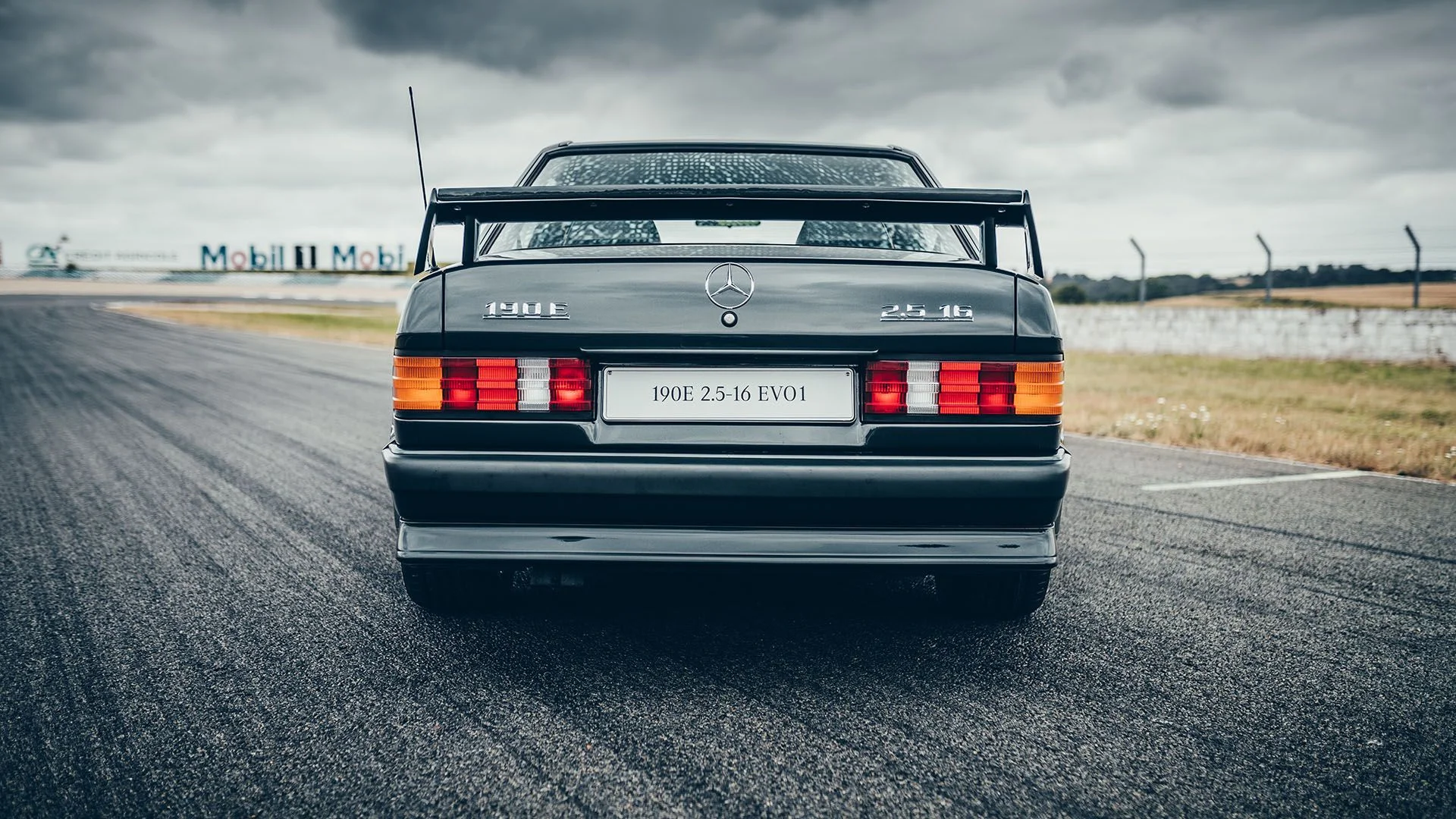
Geneva, March 1989. Mercedes-Benz unveiled the 190 E 2.5-16 Evolution, a road-going homologation particular created to make its compact sedan extra aggressive within the Deutsche Tourenwagen Meisterschaft (DTM). It regarded like a extra aggressive model of the prevailing 190 E 2.5-16, however beneath the brand new physique equipment was a considerably redesigned 2.5-liter four-cylinder engine with a bigger bore, a shorter stroke and lighter inside parts. On the street, the catalytic-converter model produced 192 hp, the identical as the usual 2.5-16. The redesign’s actual function was to provide Mercedes’ racing engineers extra room for growth. Mercedes constructed 502 examples, all completed in Blue-Black Metallic. Now often called the Evolution I, it was the primary of two Evolution fashions that carried the 190 into DTM historical past.
Background and Origins
The 190 E, recognized internally because the W201, arrived in 1982 as Mercedes-Benz’s first compact sedan. Its high-performance model, the 190 E 2.3-16, used a 16-valve cylinder head developed with Cosworth and was initially conceived with rallying in thoughts, but it surely grew to become greatest recognized in touring automobile racing. In 1988, Mercedes-Benz started formally supporting groups within the DTM, and that very same 12 months the 190 E 2.5-16 was launched with a bigger engine. Its fundamental rival, the BMW M3, was being regularly improved by means of homologated Evolution variations.
Group A laws allowed producers to homologate evolutionary variations of current competitors vehicles, supplied they met the relevant manufacturing necessities. Mercedes constructed 502 examples of the 190 E 2.5-16 Evolution to homologate the revised engine, wider wheels, bigger brakes and aerodynamic modifications wanted for its 1989 DTM marketing campaign. These upgrades have been meant to assist the group compete extra successfully in opposition to BMW and Ford.
Design and Engineering
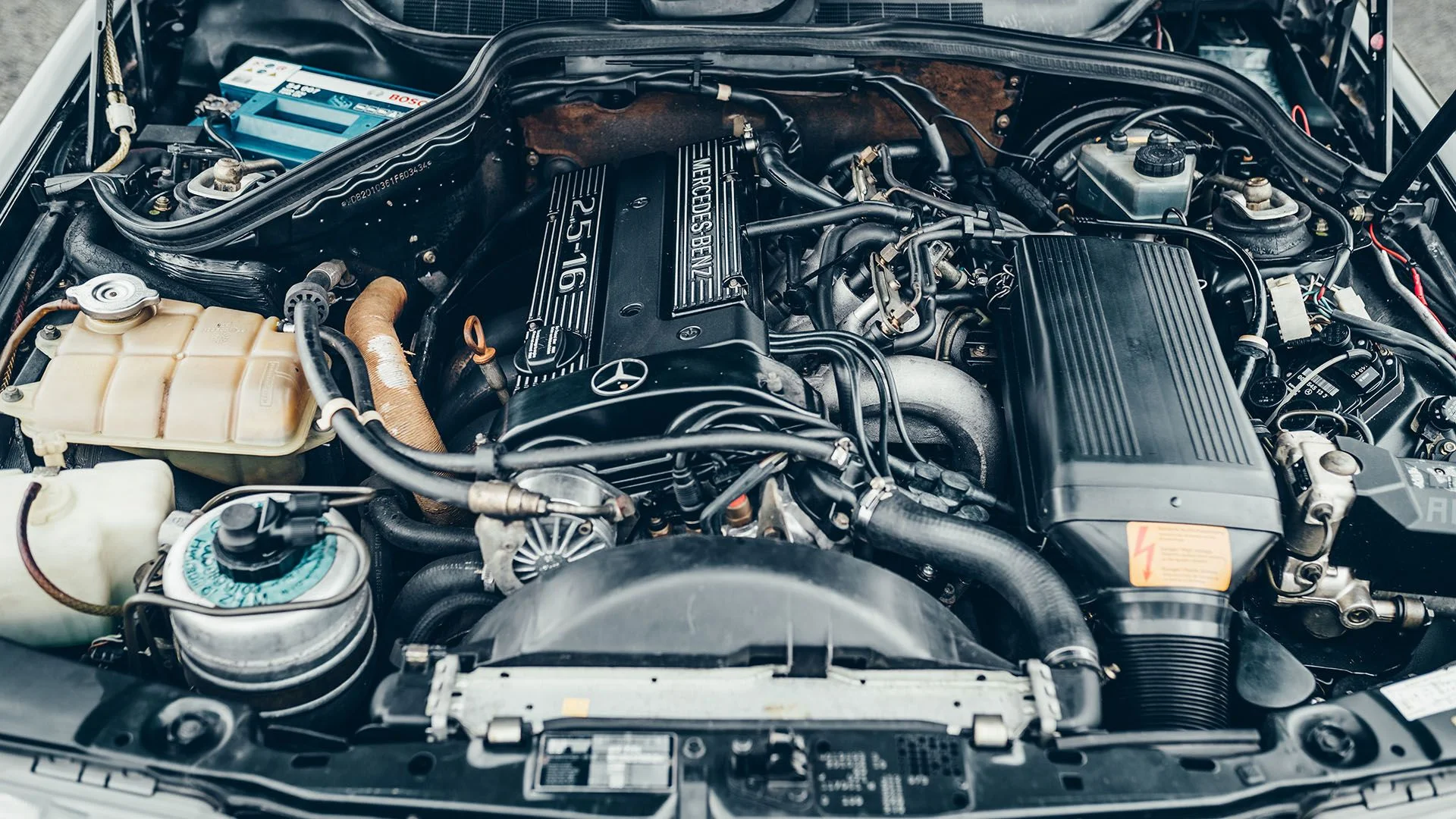
A very powerful modifications have been contained in the engine. The Evolution used the M 102.991, a big-bore, short-stroke model of the two.5-liter four-cylinder. It displaced 2,463 cubic centimeters, with a 97.3-millimeter bore and an 82.8-millimeter stroke, in contrast with 2,498 cubic centimeters for the usual 2.5-16 engine. Developed with Cosworth, it additionally had lighter rotating parts, improved lubrication and revised cam timing. The brand new design allowed the engine to rev extra freely and gave Mercedes’ racing engineers higher tuning potential. With Bosch KE-Jetronic mechanical-electronic gasoline injection, the catalytic-converter model produced 192 hp at 6,800 rpm and 173 lb-ft of torque between 5,000 and 5,500 rpm. The model and not using a catalytic converter produced 201 hp at 6,750 rpm and 177 lb-ft. For patrons who wished extra efficiency, AMG supplied a PowerPack for DM 18,000. In keeping with generally cited figures, it raised output to about 222 hp at 7,200 rpm and torque to about 181 lb-ft.
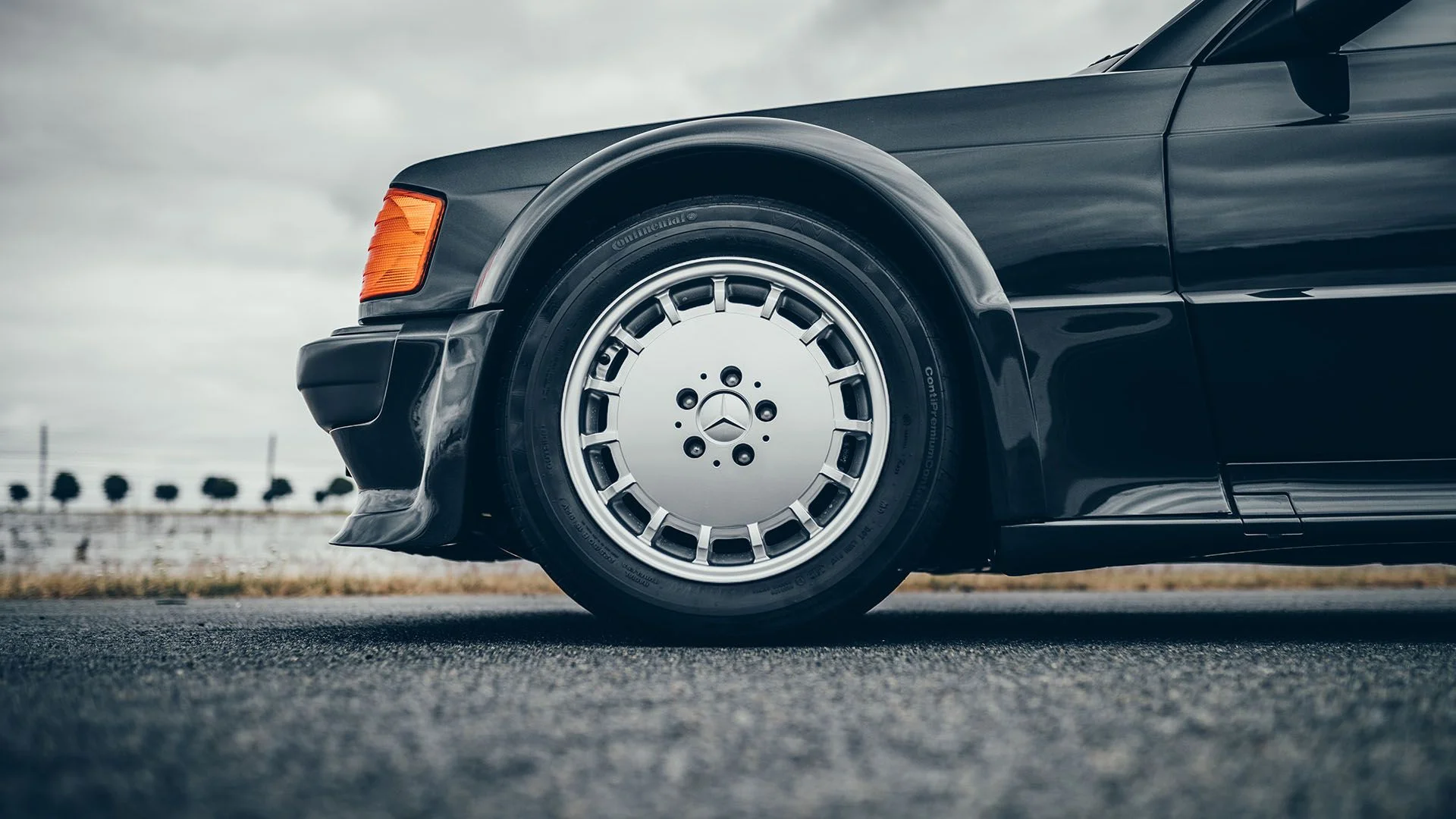
The chassis modifications supported each the street automobile and the racing program. The Evolution acquired bigger brakes, with 300-millimeter entrance and 278-millimeter rear discs, together with 8×16-inch alloy wheels and 225/50 ZR16 tires. The suspension was revised to swimsuit the broader wheels and integrated hydropneumatic self-leveling parts. Energy went to the rear wheels by means of a Getrag five-speed guide gearbox with a dogleg first gear and Mercedes’ ASD automated locking differential. Curb weight was about 2,910 kilos, and high pace was 143 mph with a catalytic converter or 146 mph with out one. The modifications primarily served to homologate wider wheels, bigger tires and stronger brakes for the race vehicles. On the street, they gave the Evolution a extra planted, purposeful really feel, regardless that its rated output matched the usual 2.5-16.
Styling
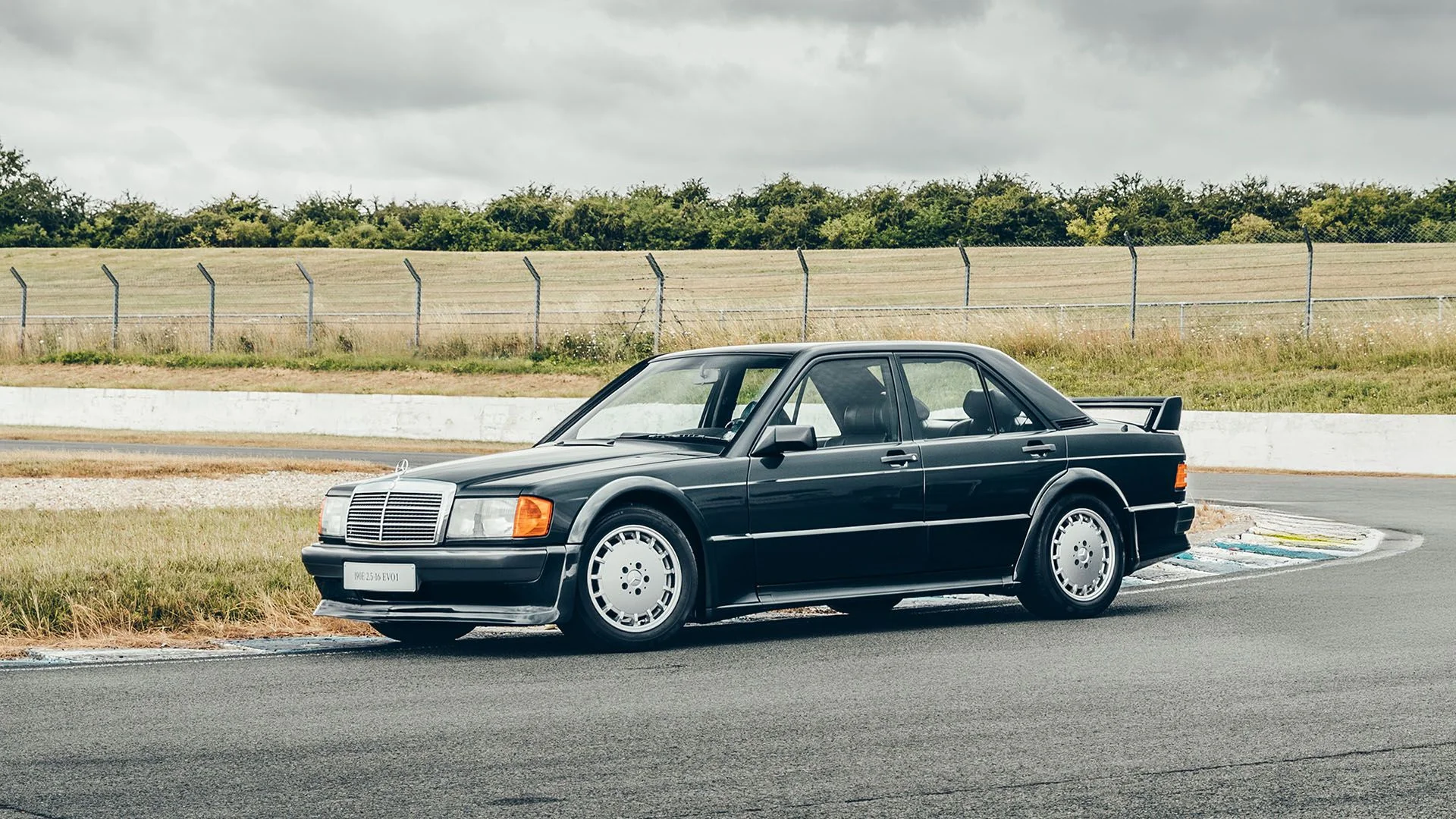
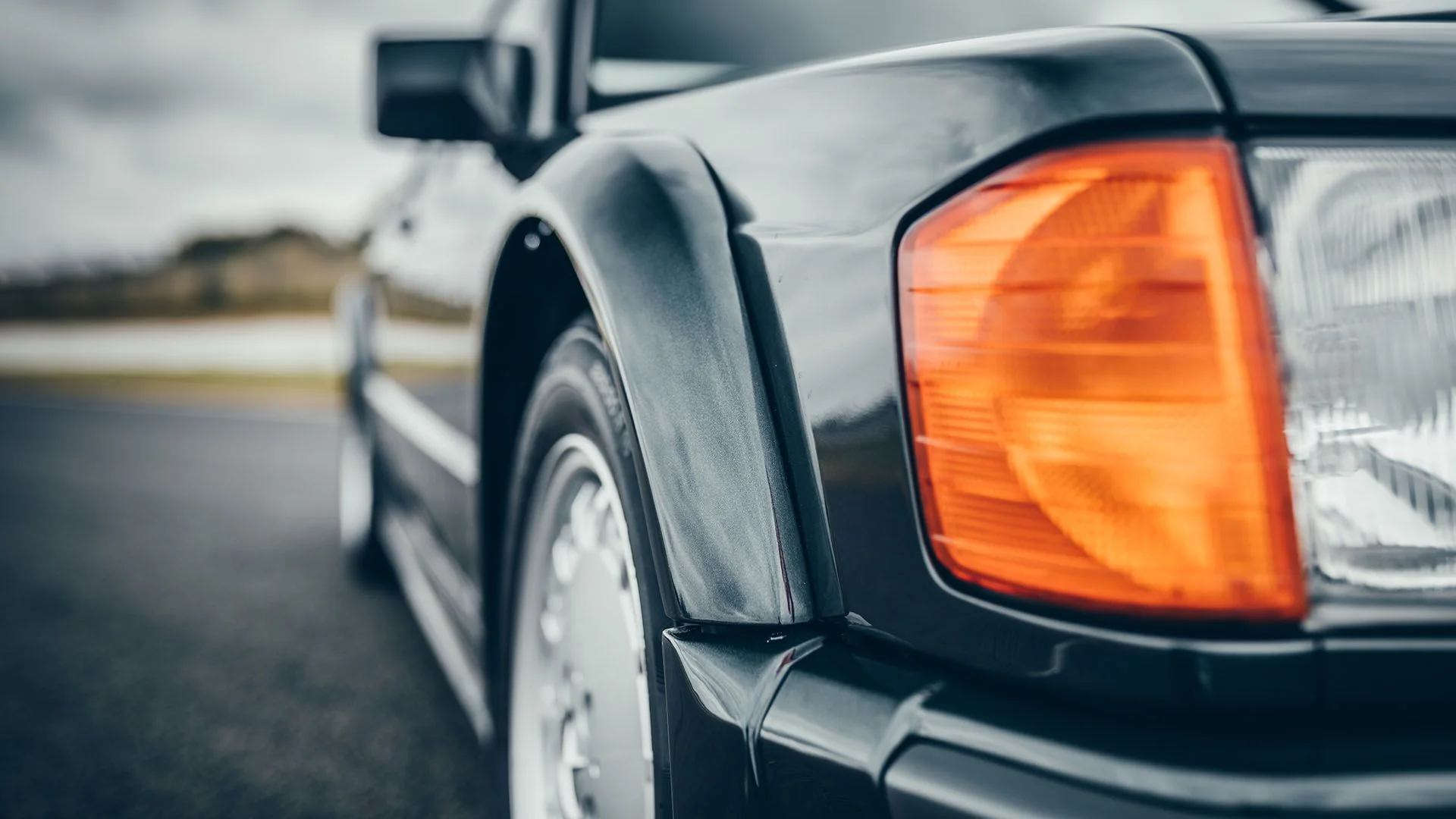
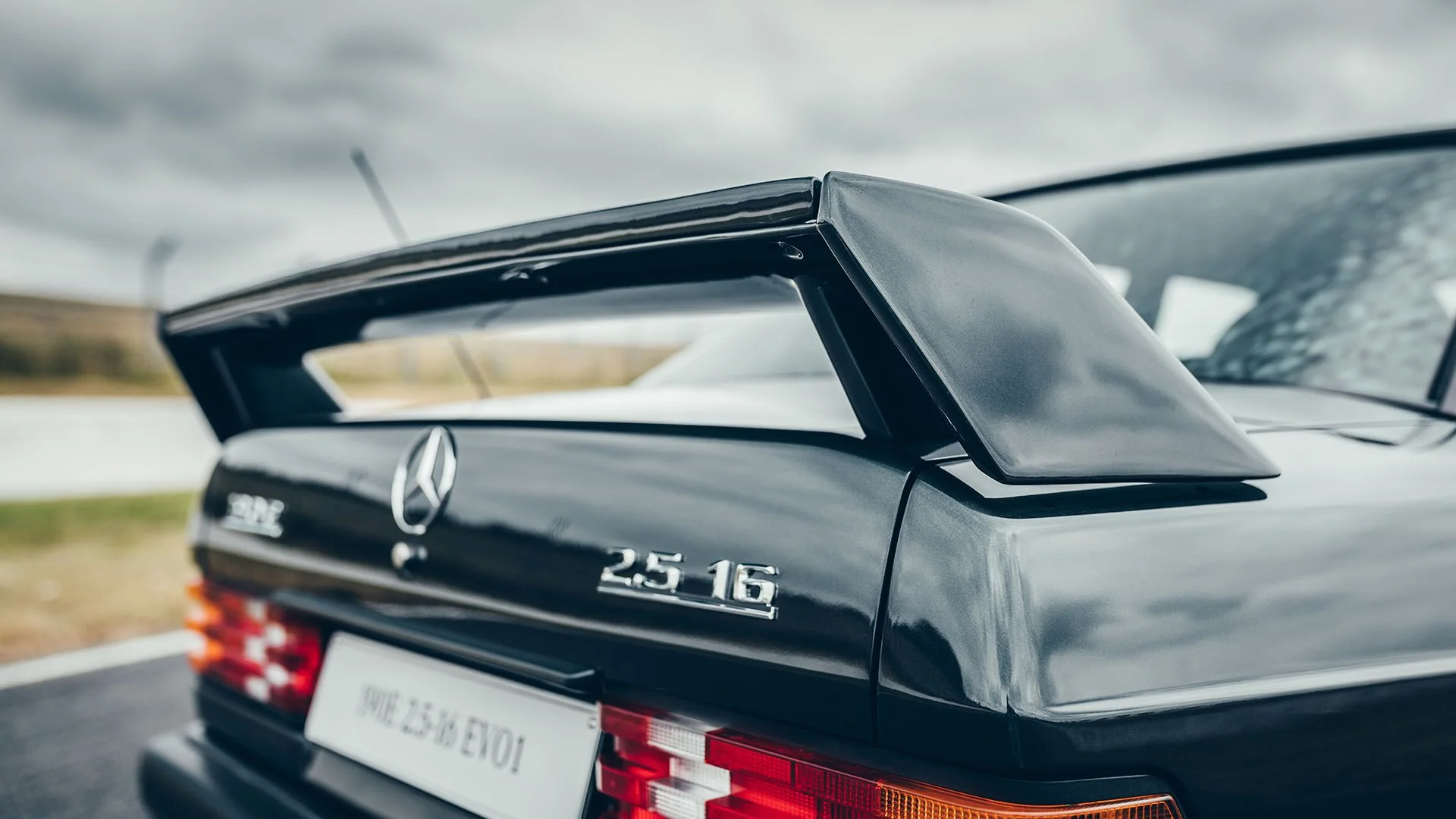
The Evolution was straightforward to tell apart from a daily 190. Its flared entrance and rear wheel arches coated the broader wheels and tires, and it gained a deeper entrance spoiler and a bigger adjustable rear spoiler. These components have been designed to enhance the race vehicles’ aerodynamics, and becoming them to the street automobile allowed Mercedes to homologate them for the DTM. Each Evolution was painted Blue-Black Metallic, giving it a darkish, purposeful look. In contrast with the extra excessive Evolution II that adopted a 12 months later, the Evolution I used to be comparatively restrained, but it surely was nonetheless clearly greater than an unusual compact sedan.
Inside
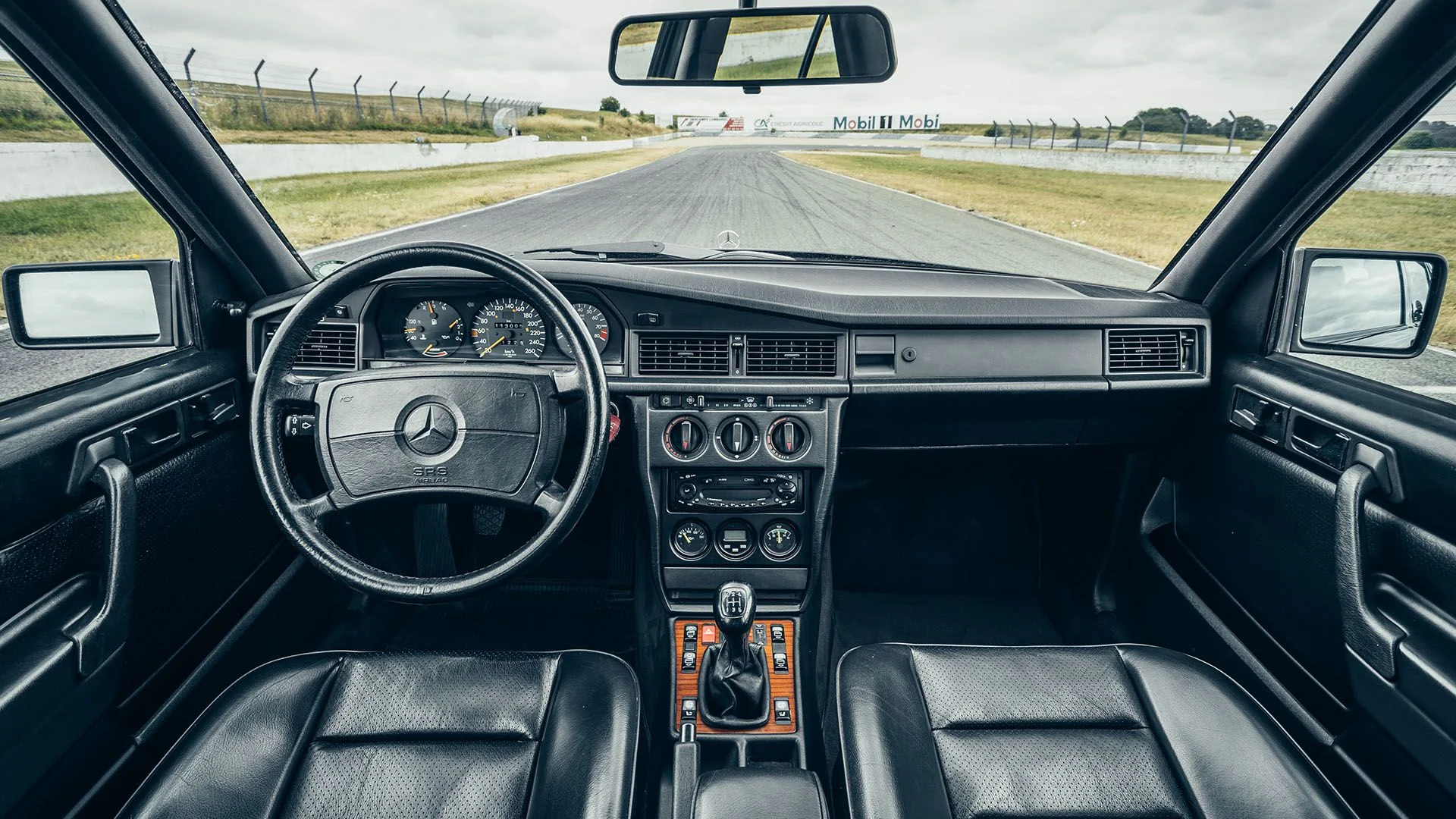
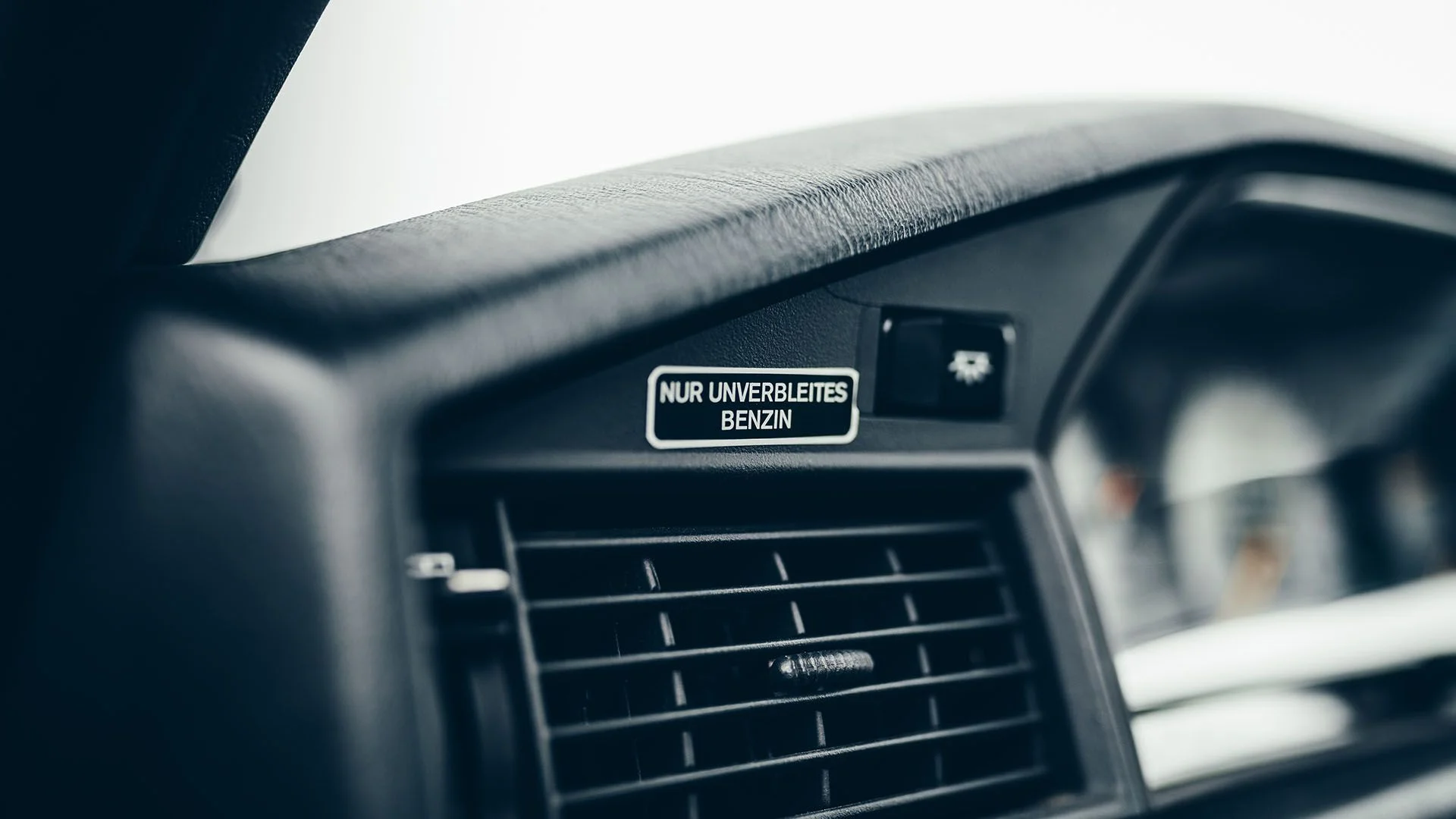
The inside was based mostly on that of the 190 E 2.5-16. It featured sports activities seats and extra center-console gauges for oil temperature, a stopwatch and a voltmeter, mounted beneath the local weather controls. The format was typical of Mercedes within the Eighties, with stable construct high quality and a practical, considerably austere design. Not like many homologation specials, the Evolution stored the 190’s on a regular basis usability, with 4 doorways, 5 seats and a sensible trunk. Gear diverse from automobile to automobile, and a few examples have been ordered with a sunroof.
Racing Historical past
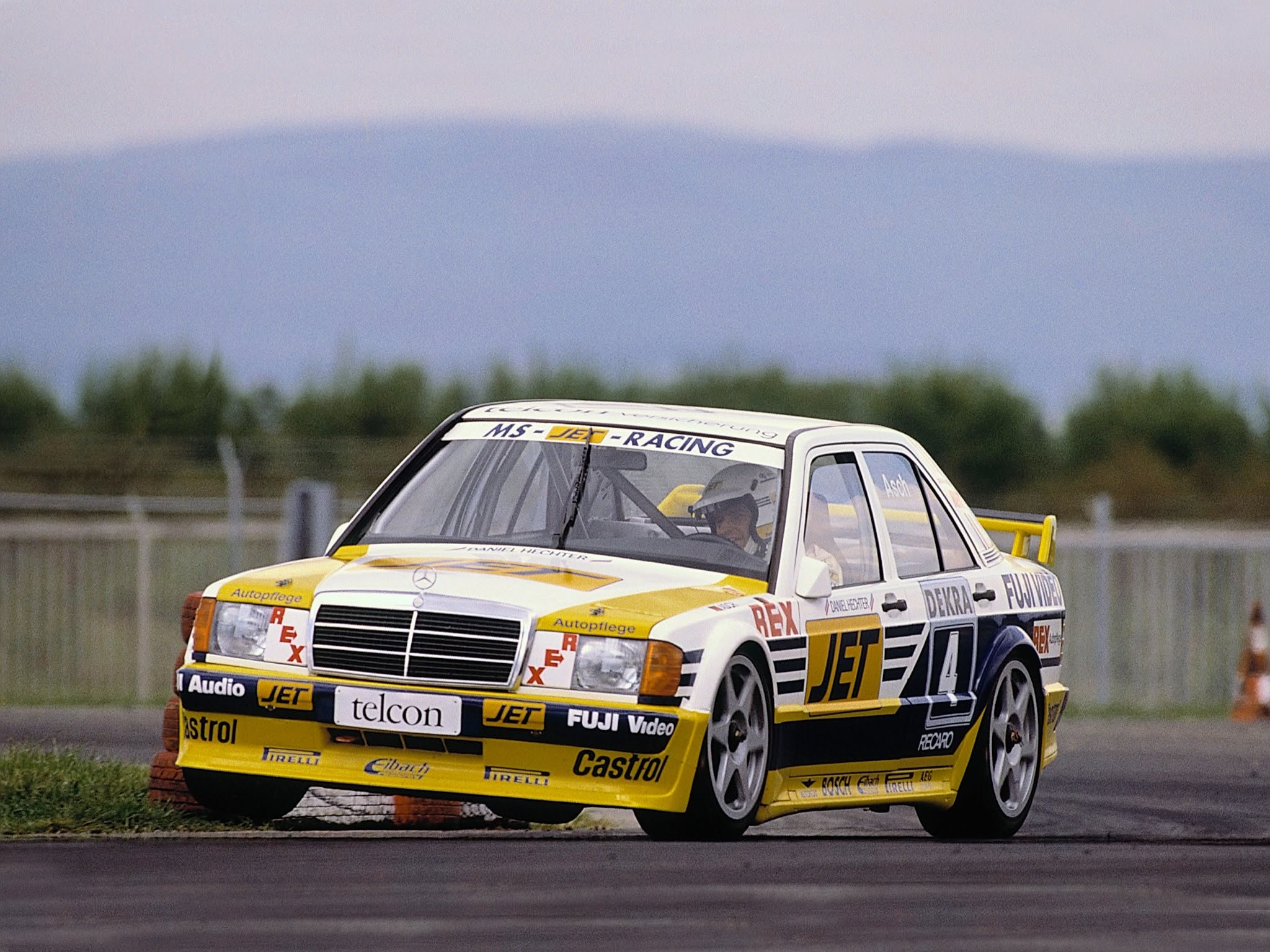
Mercedes recruited reigning DTM champion Klaus Ludwig from Ford for its 1989 marketing campaign. Ludwig gained early within the season at Hockenheim within the earlier automobile, earlier than the AMG-run Evolution made its racing debut at Mainz-Finthen in Could 1989. Roland Asch gained one of many two races there for MS Jet Racing, and Kurt Thiim gained the opposite. Thiim later added a victory on the Norisring, whereas Ludwig gained each races at Diepholz and each on the Nürburgring. In complete, the Evolution gained seven races in its first season. BMW’s Roberto Ravaglia nonetheless gained the drivers’ championship, and Thiim was the best-placed Mercedes driver, ending fourth.
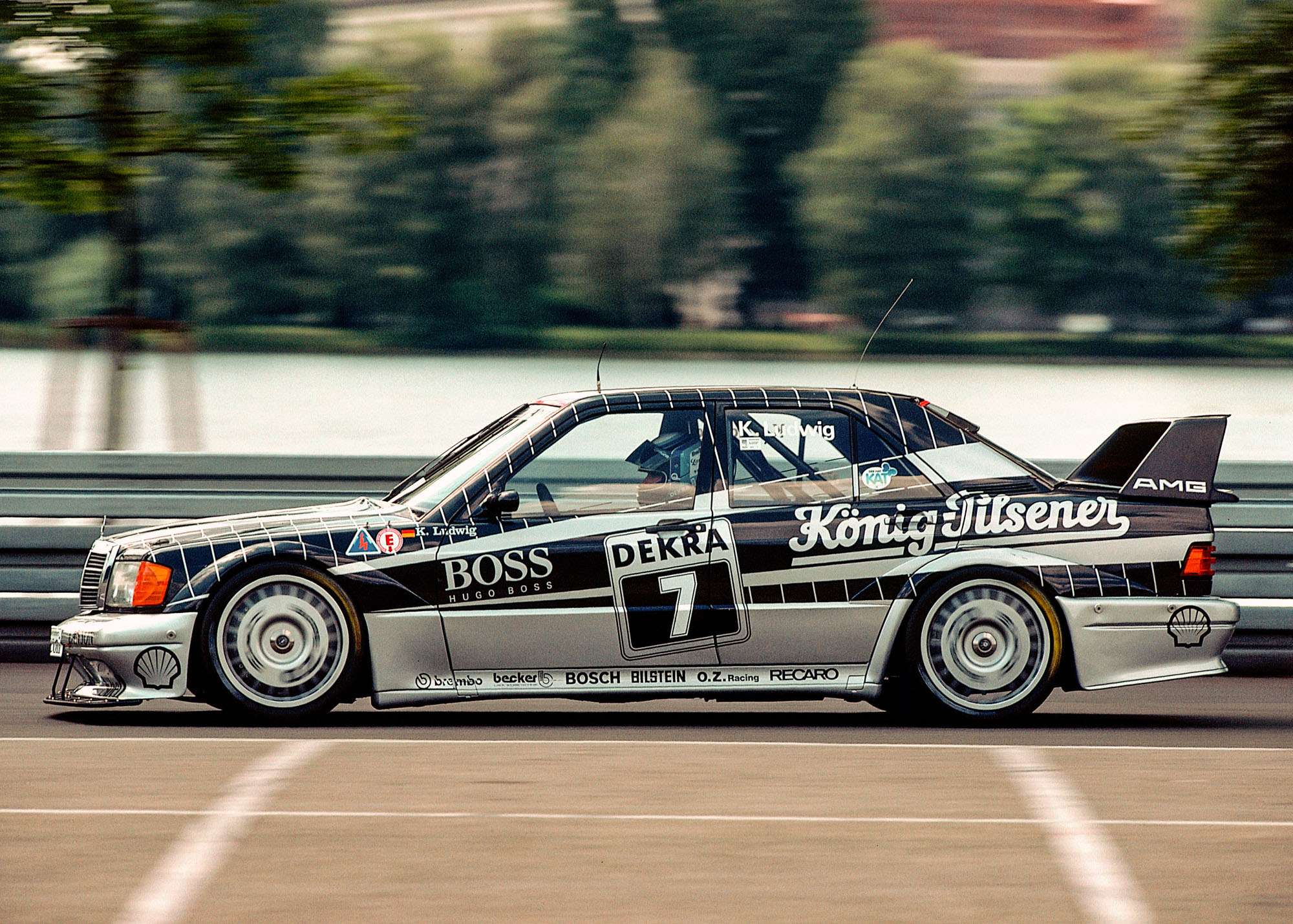
The Evolution continued into the 1990 season, when Thiim completed third within the championship. Mercedes unveiled the road-going Evolution II on the Geneva Motor Present in March 1990, and its racing model debuted on the Nürburgring Nordschleife in June, progressively changing the sooner automobile. The Evolution II, which constructed on the Evolution I with additional engine and aerodynamic growth, delivered Mercedes’ biggest DTM success. In 1992, Klaus Ludwig gained the drivers’ championship, Mercedes drivers gained 16 of the season’s 24 races, and Ludwig, Thiim and Bernd Schneider completed first, second and third within the standings. The Evolution I laid the groundwork for that success by introducing the short-stroke engine and the chassis upgrades that its successor developed additional.
Specs
- Engine: Mercedes-Benz M 102.991 inline-four, 2,463cc, DOHC, 16 valves, Cosworth-developed cylinder head, Bosch KE-Jetronic gasoline injection
- Bore and stroke: 97.3 mm x 82.8 mm
- Energy: 192 hp at 6,800 rpm (with catalytic converter); 201 hp at 6,750 rpm (with out catalytic converter); about 222 hp at 7,200 rpm with AMG PowerPack
- Torque: 173 lb-ft at 5,000-5,500 rpm (with catalytic converter); 177 lb-ft (with out catalytic converter); about 181 lb-ft with AMG PowerPack
- Transmission: Getrag five-speed guide with dogleg first gear, rear-wheel drive, ASD automated locking differential
- Wheels and tires: 8×16-inch alloy wheels, 225/50 ZR16 tires
- Brakes: 300 mm entrance and 278 mm rear discs
- Weight: Roughly 2,910 lbs (curb)
- Efficiency: 0-60 mph in about 7.7 to eight.5 seconds relying on specification; high pace of 143 mph (with catalytic converter) or 146 mph (with out)
- Worth: DM 87,204 when new
Manufacturing and Legacy
Mercedes constructed 502 Evolution I vehicles in 1989 to fulfill DTM homologation necessities. In March 1990, it unveiled the 190 E 2.5-16 Evolution II on the Geneva Motor Present. With its a lot bigger rear wing and extra aggressive bodywork, the Evolution II grew to become probably the most well-known model of the W201, and Mercedes once more constructed 502 examples.
The Evolution I has usually been overshadowed by the extra dramatic Evolution II, but it surely performed an important function within the 190’s racing story. It launched the short-stroke engine, bigger brakes and wider tires that shaped the premise of Mercedes’ later DTM success, whereas its subtler styling made it one of many extra understated homologation specials of its period. Right this moment, each Evolution fashions are extremely wanted, and the Evolution I’s rarity and racing connection have made it one of the vital collectible Mercedes-Benz fashions of the Eighties.

