



LUXUO explores a brand new wave of designers who problem standard furnishings design, elevating the chair from a purposeful object to a collectible murals. By materials experimentation, narrative depth and sculptural intent, seating is being reimagined throughout galleries, design festivals and limited-edition platforms. These creations function as each design and discourse, typically drawing on private experiences, environmental insights or cultural references so as to add layers of that means past kind and performance.
This new wave distinguishes itself by a deliberate rejection of mass manufacturing. Many of those chairs are restricted editions or one-of-a-kind items, inserting conceptual depth and craftsmanship above scalability. Designers typically make use of precision-cast metals, salvaged industrial supplies and different unconventional mediums to strengthen the work’s central idea. This ends in seating that instructions consideration and transforms a room right into a stage for design. From Seoul to Paris, these creators use chairs as storytelling units — the place kind, texture and construction converge to convey a definite imaginative and prescient grounded in inspiration and intent.
Reclaimed Narratives: Sae Jung Oh’s Salvage Chair
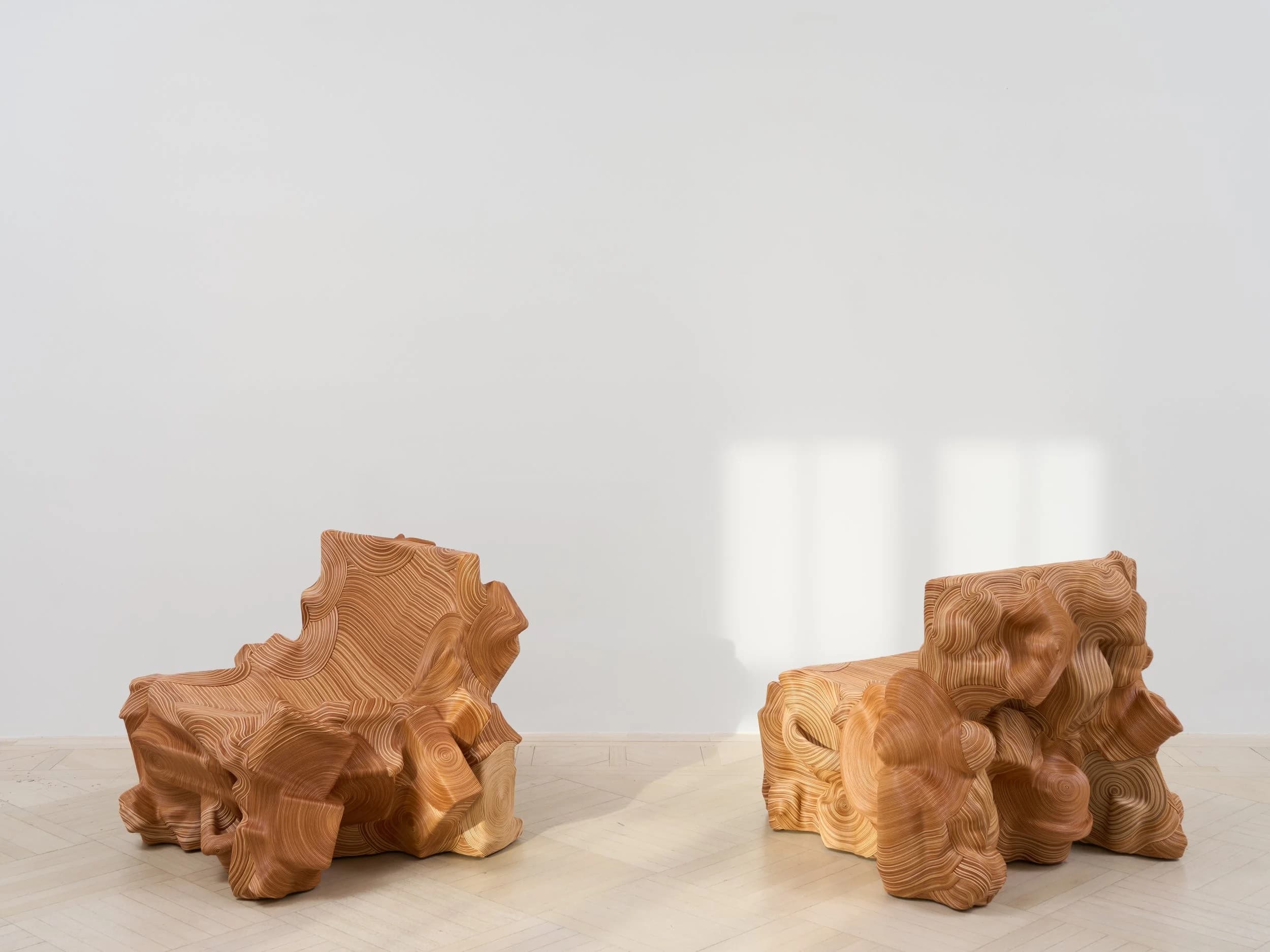
The Salvage chair by Sae Jung Oh creates a unified sculptural form out of deserted city parts. The chair — which is fabricated from discarded objects corresponding to cables and salvaged steel components — is an instance of a process-driven, reconstruction-based method. A multi-layered story is woven all through the construction as every bit preserves remnants of its former existence. Engineering points come up from the uneven composition, particularly in the case of sustaining spontaneity whereas guaranteeing steadiness and usefulness. Ignored industrial trash that has been remodeled into helpful issues is the supply of inspiration. The product is a novel product that elevates uncooked materiality into collectable design whereas difficult notions of consumerism.
Liquid Type: Faye Toogood’s Roly-Poly Uncooked Chair
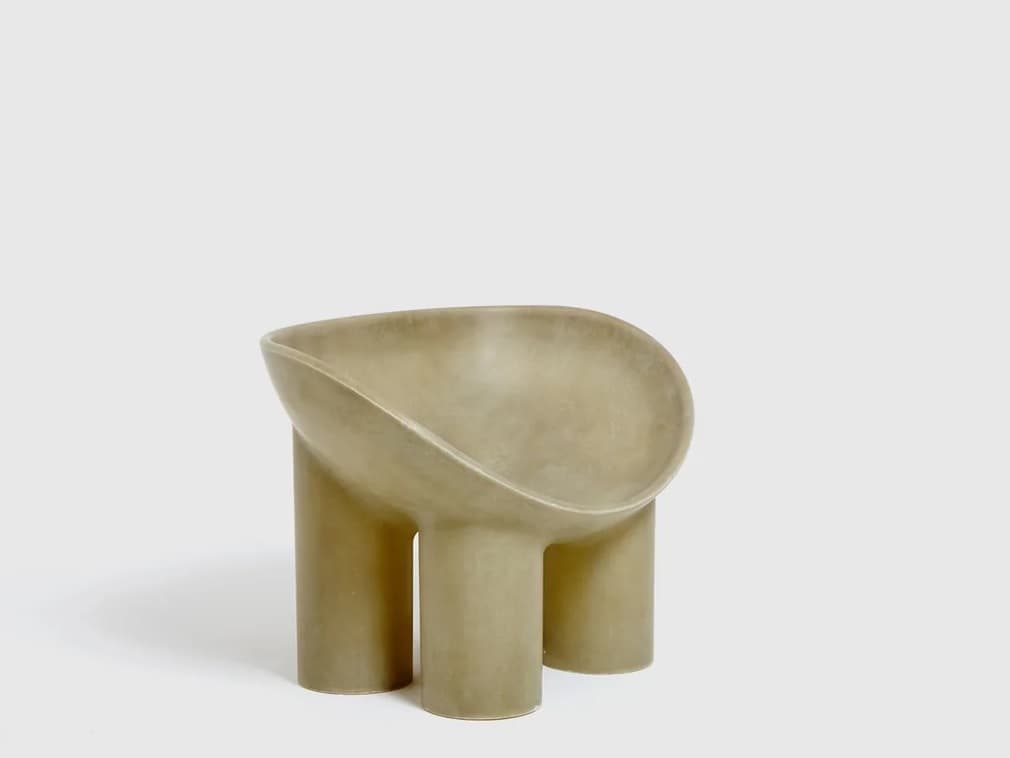
The newest model of the Roly-Poly Chair by Faye Toogood deepens her investigation of exaggerated kind and tactility. The brand new chair — dubbed “Roly-Poly Uncooked” — attracts the identical bulbous dimensions from the unique design, however it’s now solid in fibreglass with a softened, nearly molten look — difficult standard ergonomics. The design emphasises quantity over linearity and is influenced by early sculptural kinds and rudimentary seats. It took rigorous weight distribution calibration to attain structural integrity inside such a rounded form.
Heritage Recast: Jiri Krejcirik’s Ode to Chair 14
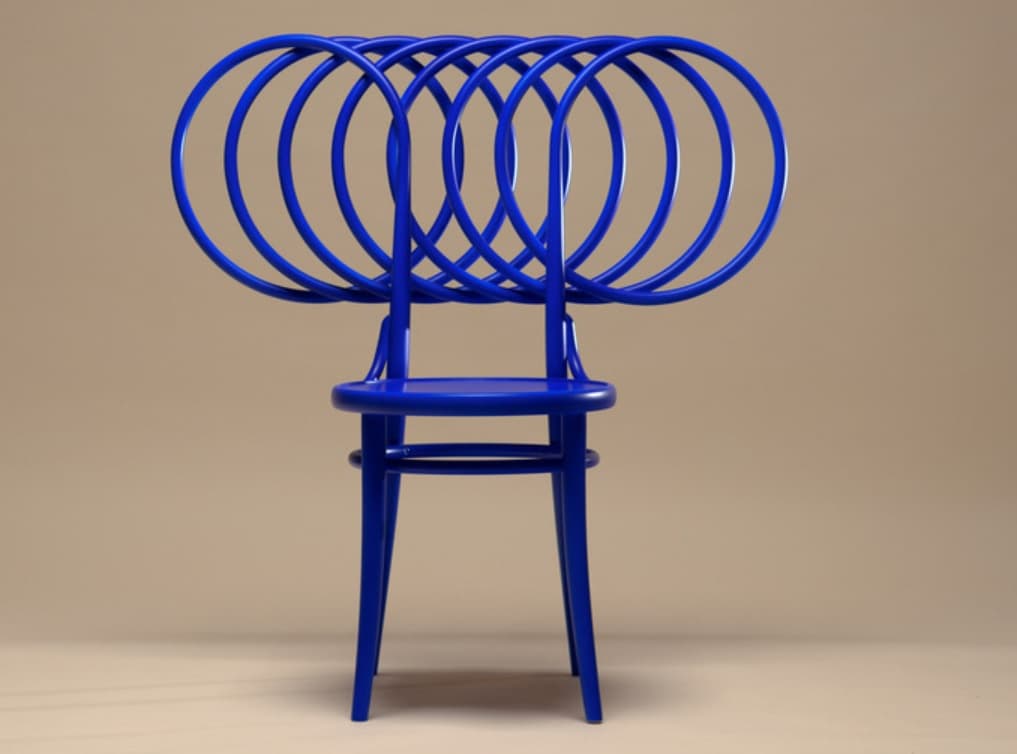
The standard bentwood typology is remodeled right into a sculptural assertion in Krejcirik’s Ode to Chair 14. The design introduces massive round backrest parts that problem structural familiarity, thereby exaggerating basic approaches to furnishings. The chair — made utilizing preexisting moulds — examines the battle between expressive kind and industrial custom. Exact engineering was wanted to attain stability inside such prolonged and expressive geometry. The result is a limited-edition piece that raises the query of how far a rudimentary design could also be altered earlier than it turns into a standalone murals.
Industrial Poetics: Sabine Marcelis’ Gradient Resin Seat
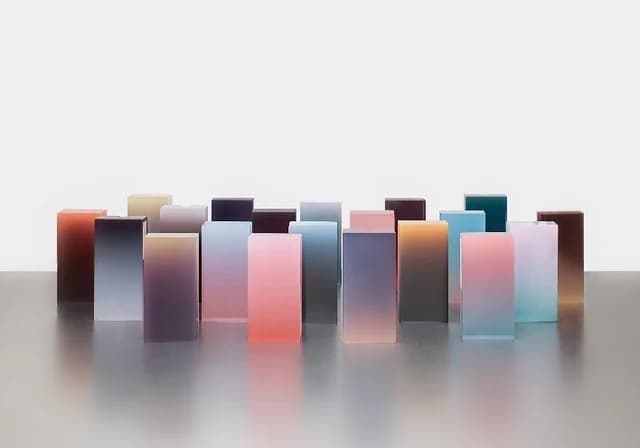
With a limited-edition resin chair marked by its gradient end, Sabine Marcelis explores the interaction of sunshine and translucency. The fabric absorbs and disperses gentle, producing refined tonal variations throughout its floor. Manufacturing is technically demanding and time-intensive, as precision casting is required to take care of readability and forestall imperfections. Pure gentle — notably the color shifts at daybreak and nightfall — serves as the first inspiration. Marcelis’ concentrate on sensory expertise is heightened by the chair’s twin function as each seating and a light-responsive object.
Structural Expression: Nacho Carbonell’s Progress Chair
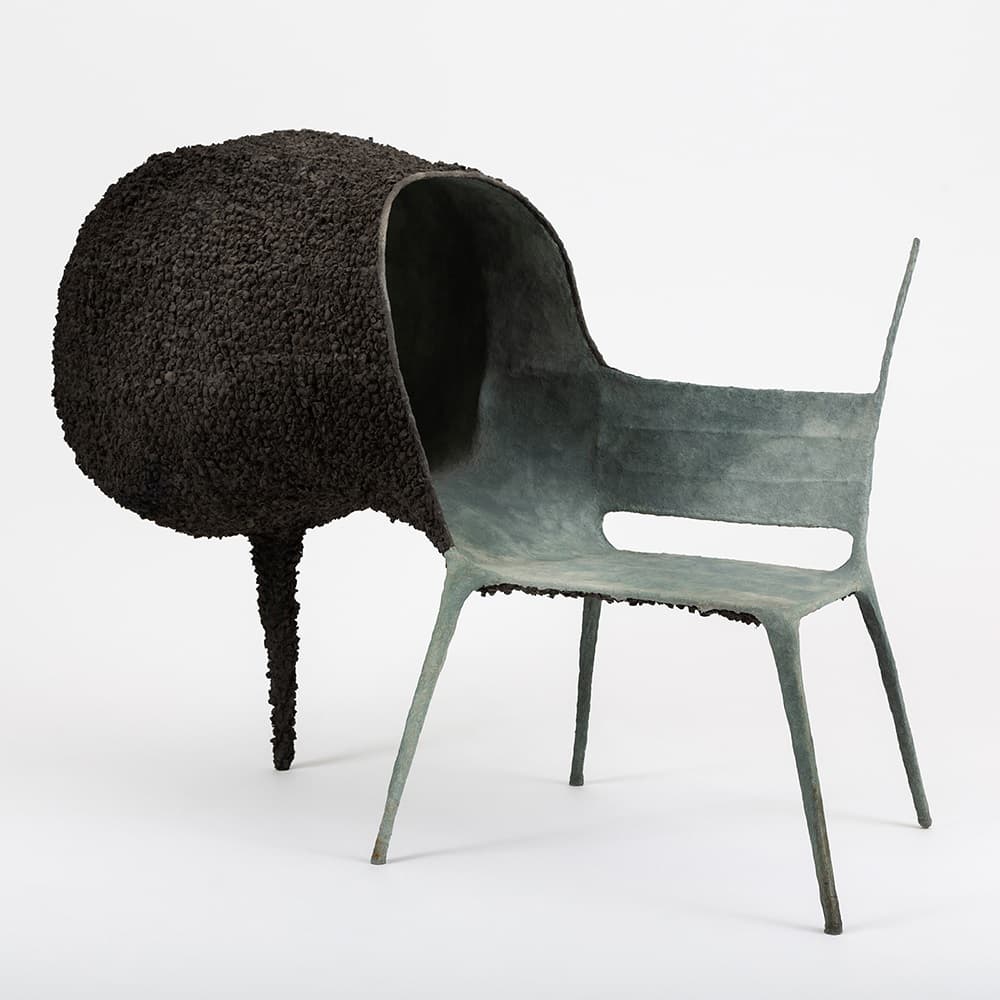
The Progress Chair by Nacho Carbonell continues an exploration into materials stacking and natural extension. The chair — which is fabricated from metal, epoxy and textile — appears to develop outward like a residing factor. Layers are manually assembled in the course of the fabrication course of, including unpredictability to the completed product. It’s fairly troublesome to take care of structural coherence in such an expressive silhouette. Pure improvement patterns and the notion that furnishings is an extension of the environment function inspiration. The chair doesn’t observe conventional symmetry; relatively, it favours an intuitive, nearly haphazard, natural aesthetic.
Sculptural Consolation: Raphael Navot’s Whale Armchair
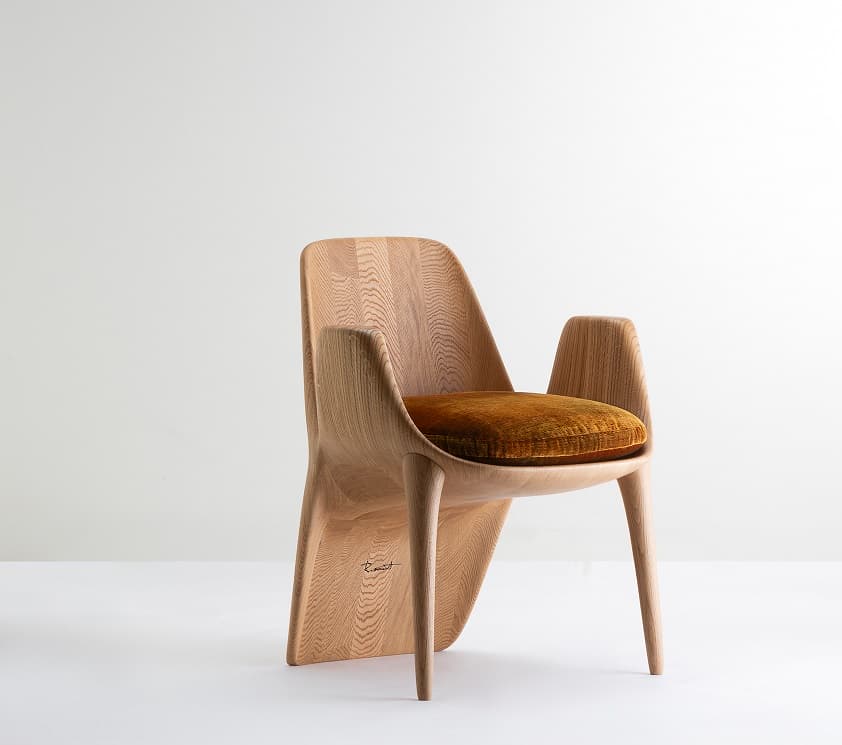
The Whale chair by Raphael Navot combines home utility with sculptural prominence. The chair — which strikes a steadiness between monumentality and cosy consolation — is fabricated from carved wooden and has upholstered seating that resembles the pure curves of a whale. To create fluidity with out sacrificing structural integrity, the design wanted cautious manipulation of strong supplies. Pure kinds function the inspiration, remodeling the grace of marine life right into a limited-edition, gallery-ready piece. The purposeful exaggeration of every form encourages each tactile engagement and visible reflection. The chair exhibits Navot’s concentrate on supplies and house, turning a easy seat right into a collectable piece of artwork.
Artsy Aesthetic: China Chair by Chen Darui
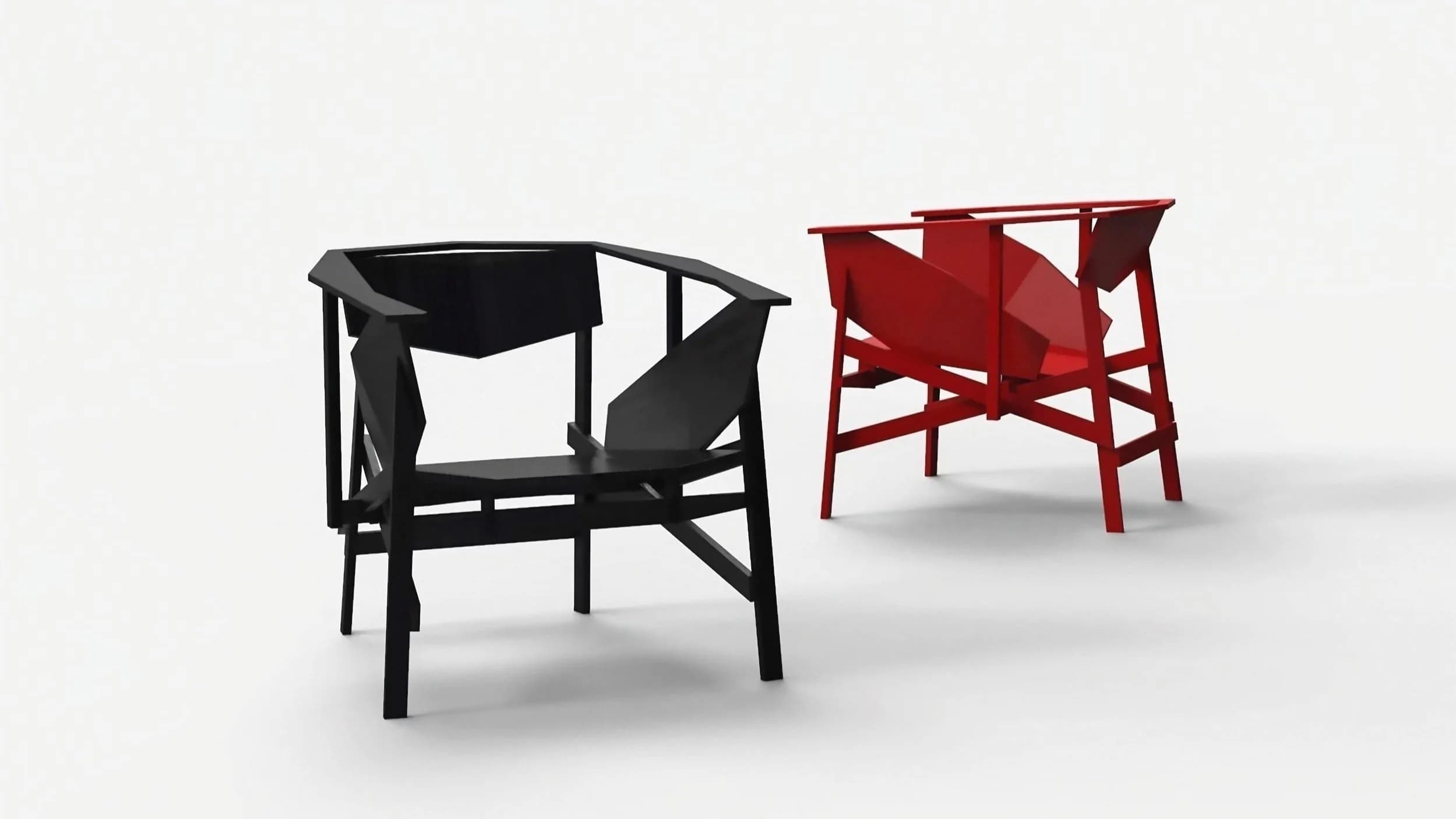
Chen Darui’s China Chair transforms conventional seating logic right into a sculptural, aggressively geometric form. The chair is fabricated from oak with a wealthy black or pink lacquer end, combining architectural precision with a way of historical past, proven by its intersecting planes and sharp angles. The design thought challenges the significance of utilitarian simplicity in favour of expressive construction and is the results of a purposeful “demolition” of Western modernist aspirations. The sculpture retains its utilitarian integrity as seating whereas exploring steadiness and asymmetry in every aircraft and angle.
Solely obtainable in 199 signed items, the chair is each an inside characteristic and a conceptual merchandise that encourages reflection on how innovation and custom could coexist in a single body. Designed in 2024, it’s firmly positioned among the many collectable design scene because of its robust sculptural character and limited-edition standing.
Digital Craft: Jean‑Baptiste Anotin “Godspeed Object” Chair
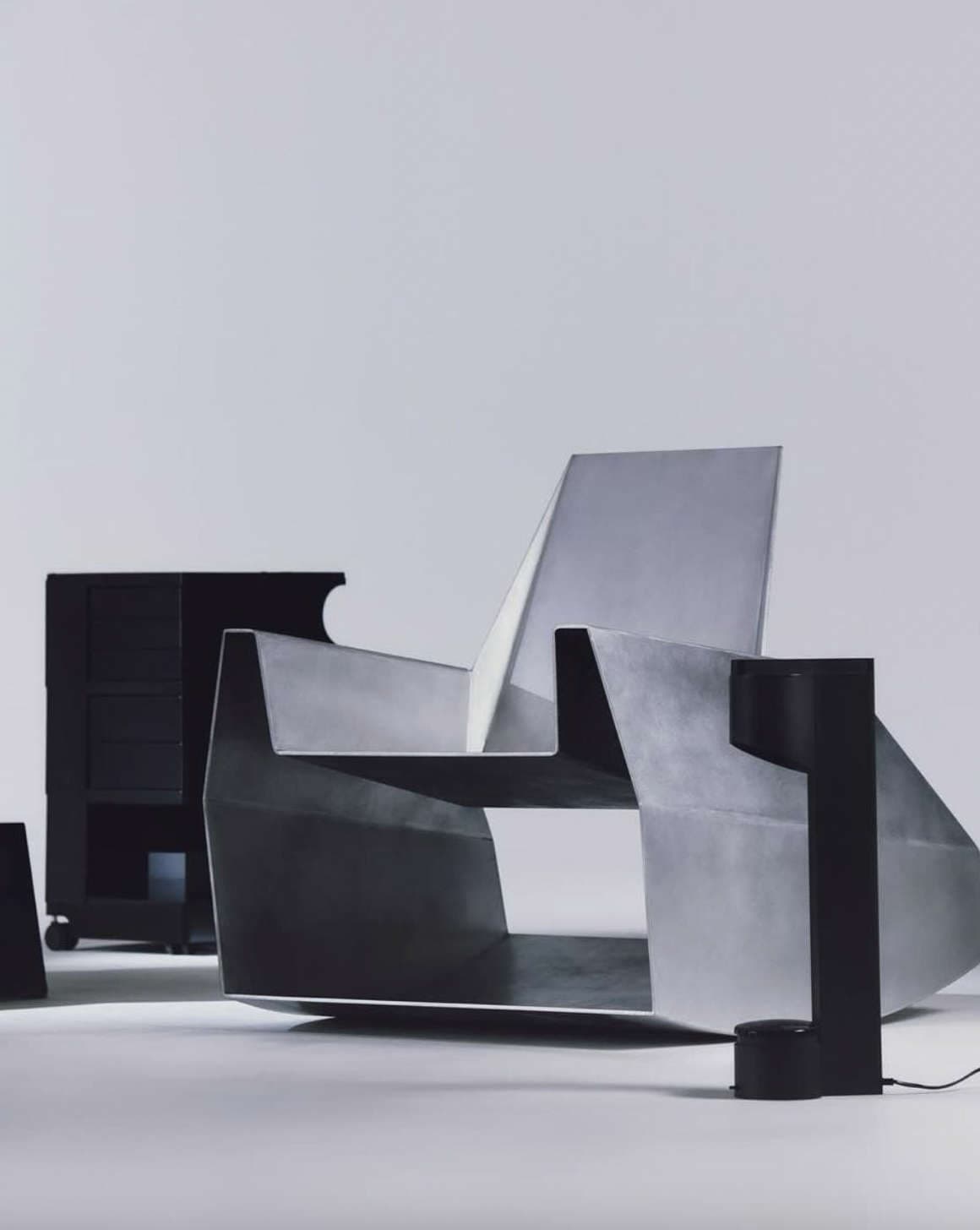
The sculptural armchair designed by Jean-Baptiste Anotin doesn’t conceal itself in a nook. It reads like a chunk of recent artwork one can sit on and was created at his Paris studio, “Ready for Concepts”. There are solely eight items on the earth. Formed aluminium items and exact geometry make up its alluring design, which pays homage to industrial processes. A functioning object turns into a second of pause when gentle and reflection are captured by its glistening floor. The chair anchors an area like a spectacular sculpture. Furnishings in Anotin’s palms turns into one thing one would discover relatively than utilise.
Take a Seat
These chairs characterize a bigger change in fashionable design, the place worth is not decided solely by operate. Fairly, narrative, course of and materials inquiry are prioritised. Whether or not impressed by nature, expertise or city particles, every work shows a novel interpretation of inspiration — all devoted to pushing the boundaries of what a “easy” chair could symbolise. The common-or-garden chair has change into a necessary instrument for experimentation as collector design continues to achieve recognition. These items — which fall between artwork and inside design — redefine exclusivity through creativity and function, offering a window right into a future through which furnishings capabilities as each an thought and an object.
For extra decor reads, click on right here.

