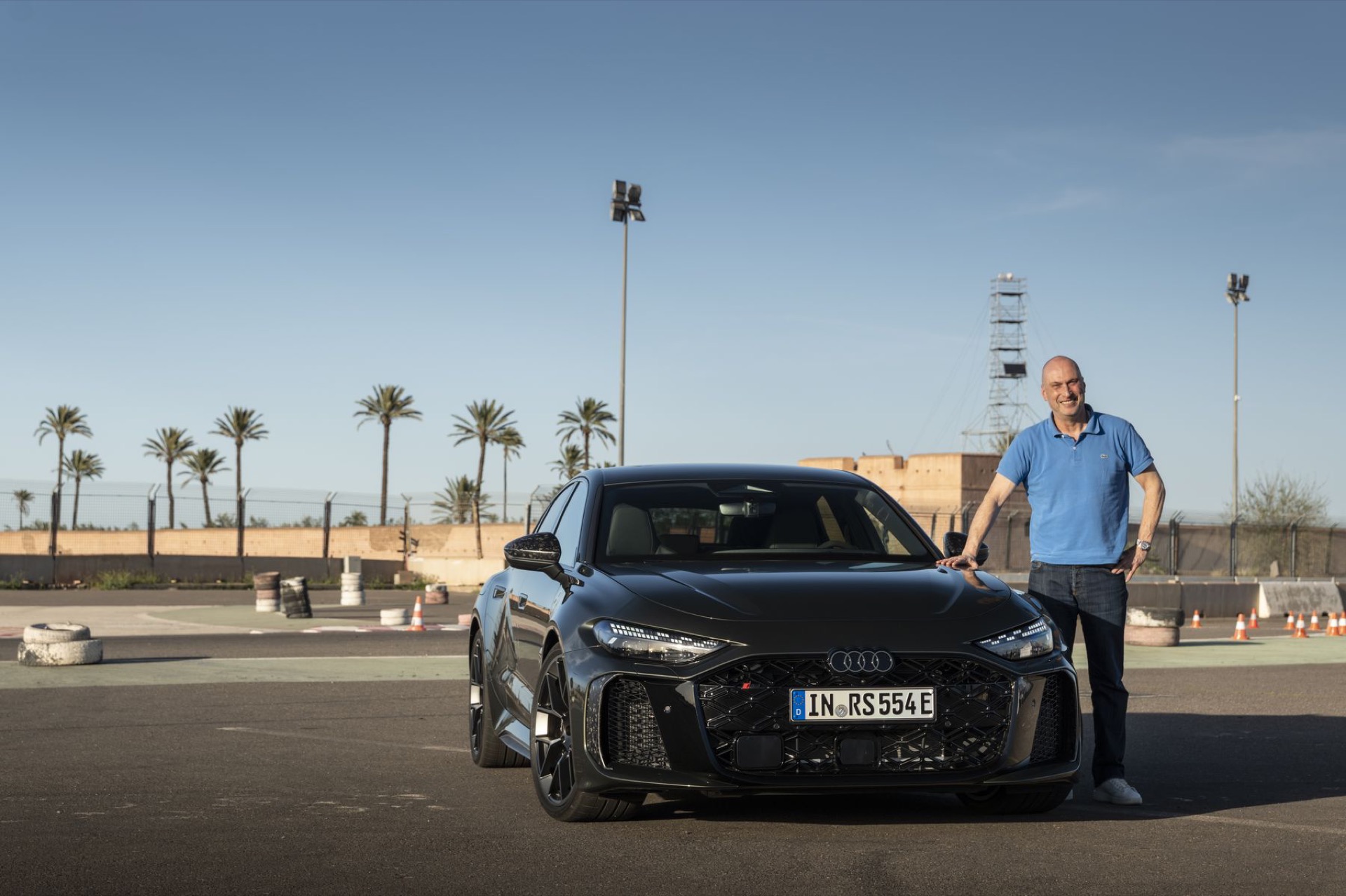



At 2,370 kilograms and with huge exhaust retailers, the Audi RS5 Avant cuts an imposing determine each visually and on paper. But regardless of its appreciable mass, the plug-in hybrid efficiency property delivers spectacular agility.
The Audi RS5 stands broad and muscular on the street. Even at a standstill it radiates overtaking authority pressed into sheet steel. Many consumers will naturally gravitate in direction of the Avant property, although the saloon arguably appears to be like much more elegant. That, after all, is a matter of style. What can’t be debated is the sheer presence of this BMW M3 rival from Ingolstadt. Because of plug-in hybrid help, the RS5 delivers 470 kW (639 PS) of system output and 825 Nm of torque throughout each axles. A 25.9 kWh battery, with 22 kWh usable capability, permits as much as 84 kilometres of electric-only driving. The draw back is weight. At 2,370 kilograms, the RS5 Avant is way from gentle. For comparability, a BMW M3 Competitors Touring xDrive weighs 1,940 kilograms, the Porsche Cayenne Turbo GT 2,245 kilograms and even the bigger Audi RS6 Avant is available in at just below 2.1 tonnes, although with none hybrid module.
BMW followers might mock the Audi as a “heavyweight”, but a look on the BMW M5 Touring exhibits an identical actuality. It too is a plug-in hybrid and ideas the scales at 2,425 kilograms. Anybody who desires electrical help should settle for further mass. That’s the actuality no matter which engineers developed the automobile. In truth, a brand new philosophy has emerged amongst engineers. As a substitute of chasing ultra-lightweight development, the mantra now’s easy: weight solely issues should you can really feel it.
That philosophy turns into clear as soon as the RS5 is in movement. Engineers have pushed the interplay between {hardware} and software program additional than earlier than. On the coronary heart lies the drivetrain. The two.9-litre twin-turbo V6 produces 375 kW (510 PS) and 600 Nm. It sits longitudinally on the entrance, adopted by an eight-speed tiptronic transmission that homes the electrical motor delivering 130 kW (177 PS) and 460 Nm. A Torsen centre differential distributes torque between the axles relying on driving mode, starting from 70:30 to fifteen:85 front-to-rear.
To make sure the system works as a cohesive unit, the engine operates in a modified Miller cycle, closing the consumption valves earlier to enhance effectivity beneath partial load. This issues in a plug-in hybrid, the place the combustion engine continuously operates at partial load alongside the electrical motor. Two variable-geometry turbochargers guarantee fast response and a broad torque curve. Enhance stress reaches as much as 1.5 bar, injection stress is greater, and the consumption tract has been shortened. For the primary time on this collection, a water-to-air intercooler is used. Altogether, engineers extracted 44 kW (60 PS) extra from the engine than within the earlier RS4. Mixed output rises to 470 kW (639 PS) and 825 Nm.
Efficiency is suitably dramatic. The RS5 Avant accelerates from zero to 100 km/h in 3.7 seconds, whereas electronics restrict prime velocity to 250 km/h. But uncooked figures inform solely a part of the story. What issues is how the know-how performs on the street.
Right here the rear axle performs an important position. A planetary gearset permits torque to be distributed electromechanically between the rear wheels. In contrast to clutch-based programs, Audi Dynamic Torque Management actively shifts energy with out relying solely on traction variations. A water-cooled permanent-magnet motor producing 8 kW (11 PS) generates as much as 40 Nm of torque for this objective. Along with a mechanical superposition gearbox and a standard differential, this setup can create a torque distinction of as much as 2,000 Nm between the rear wheels.
The system checks driving circumstances each 5 milliseconds and may direct torque in both path, beneath acceleration, deceleration or braking. It stabilises the automobile exactly when the mass of the hybrid system may in any other case scale back agility.
The engineering effort pays off. Whether or not on a racetrack, mountain street or sweeping nation lane, the RS5 strikes via corners with shocking lightness and makes excessive speeds really feel easy. The entrance axle responds eagerly to steering inputs, whereas the rear gently rotates into corners. By no means aggressive, by no means nervous, however all the time supportive. Push onerous sufficient and the mass inevitably turns into noticeable, but the Audi stays controllable and composed. The non-compulsory ceramic brakes ship highly effective stopping efficiency when required.
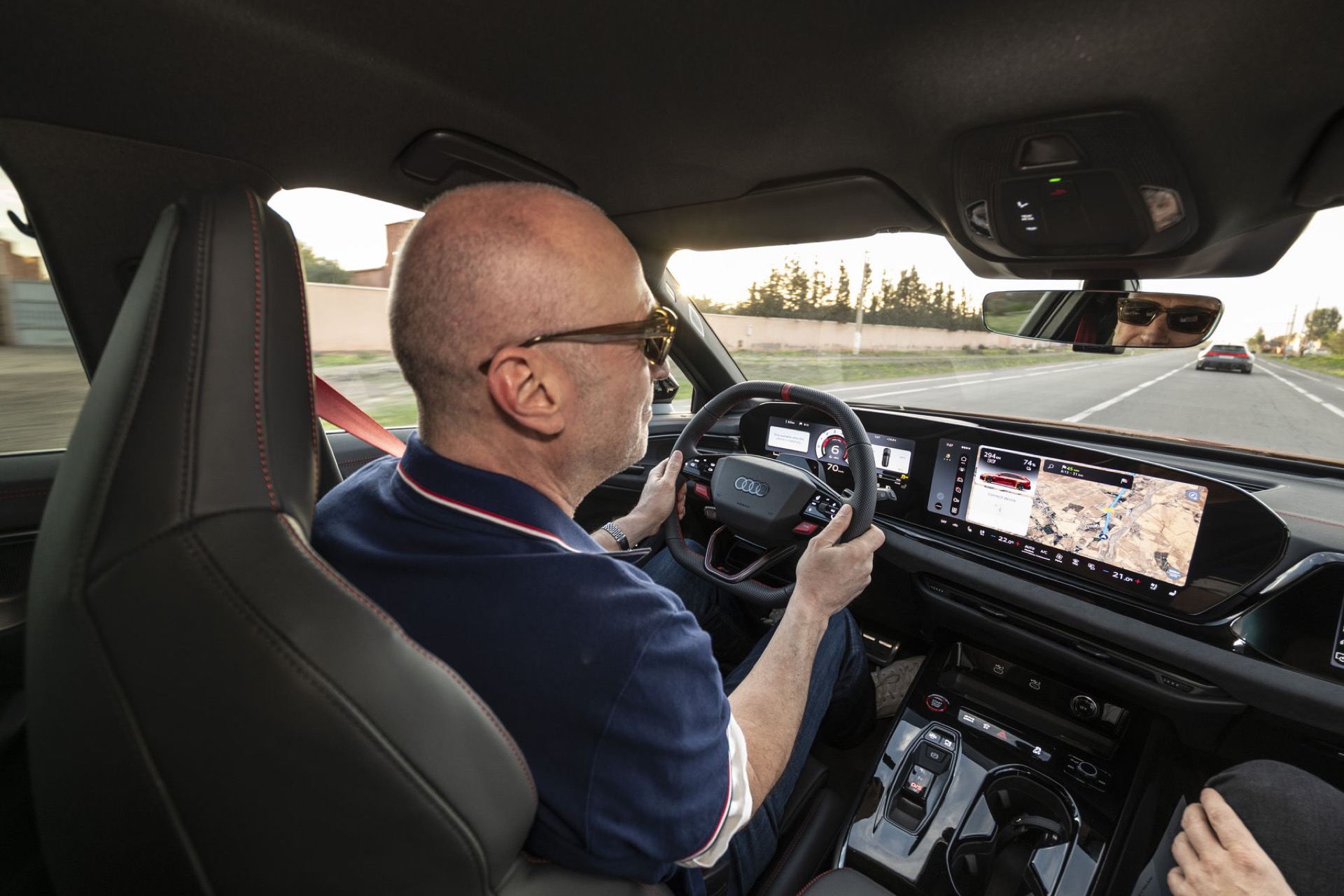
Varied driving modes permit the RS5 to be tailor-made to totally different preferences. Consolation, Balanced and Dynamic are joined by RS Sport, RS Torque Rear and RS Particular person. In Balanced mode the RS5 behaves predictably, and electrical driving is barely obtainable on this and Consolation mode. Dynamic permits the rear axle extra affect. RS Sport focuses on most traction and lateral acceleration. RS Torque Rear unlocks the playful facet, turning the Audi right into a drift machine by directing extra torque to the outer rear wheel.
RS Particular person mode permits drivers to fine-tune steering, suspension, throttle response, sound, ESC and torque distribution. The enhance operate offers an additional burst of acceleration for ten seconds on the press of a steering wheel button. Adaptive dampers preserve the journey balanced, by no means overly harsh and by no means too gentle, even on tough mountain roads.
In on a regular basis use, nevertheless, the RS5’s dimension turns into obvious. Together with mirrors, it measures 2.10 metres large, round 9 centimetres greater than the A5. Slim streets or motorway development zones demand cautious judgement. The hybrid packaging additionally impacts practicality. Boot capability drops from 495 litres in the usual A5 Avant to 361 litres. That’s even 20 litres lower than in a VW Golf. Fold the rear seats and the quantity will increase to 1,302 litres. Within the saloon model it ranges from 331 to 1,170 litres.
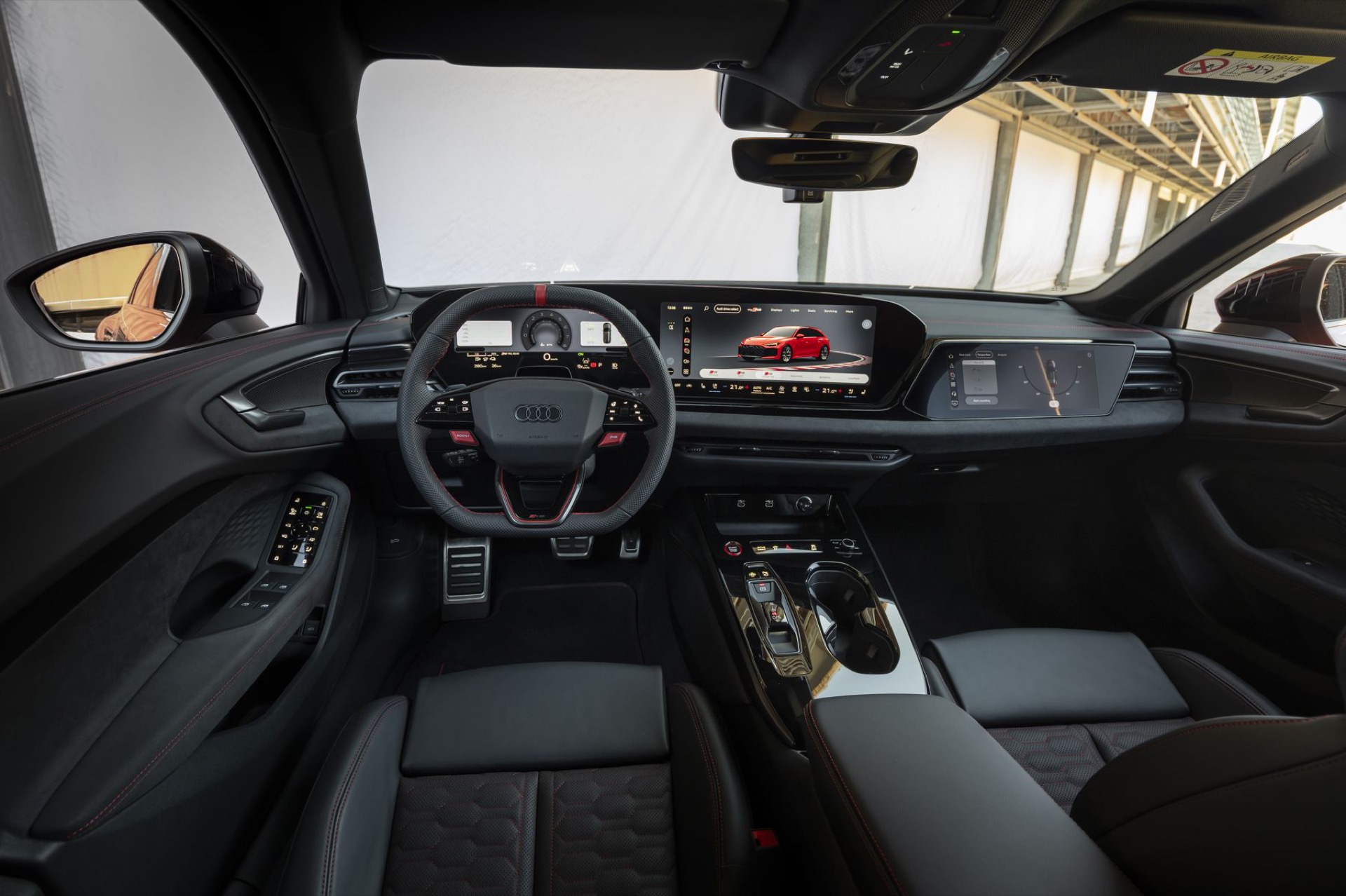
Audi interiors have been as soon as among the many model’s biggest strengths, identified for beautiful supplies and impeccable construct high quality. In the present day that popularity stays solely partially intact. Particulars such because the 4 rings merely utilized to the steering wheel hub or the plastic door handles really feel much less premium than anticipated. Urgent buttons on the door panel strikes all the module, far faraway from the stable tactile high quality Audi as soon as delivered. Rear passengers face a centre console product of onerous plastic. That’s disappointing in a automobile beginning at €106,200 for the saloon and €107,850 for the Avant.
The infotainment graphics additionally really feel uninspired. Whereas the digital devices provide a number of show choices, a basic structure with analogue-style speedometer and rev counter is lacking.